Vitamin K homologue menaquinone-7 supplementation may attenuate coronary artery calcification
21 Jun 2026
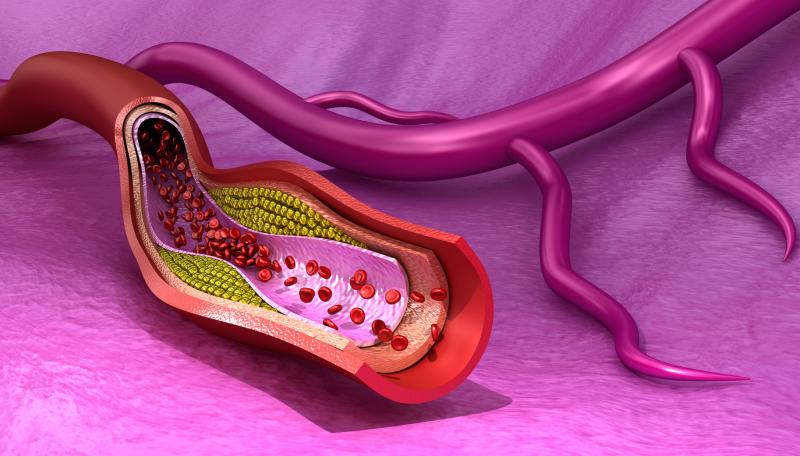
Supplementation with vitamin K homologue menaquinone-7 (MK-7) for 2 years appears to reduce plaque calcification in patients with symptomatic coronary artery disease, as shown in a study.
The study included 167 patients with coronary artery calcification (CAC) score of 50–400 Agatston units (AU). The patients received supplementation with either MK-7 at a daily dose of 360 µg (n=85) or identical placebo (n=82) for 2 years.
The primary outcome was the evolution of the CAC score and calcium mass at 1 and 2 years of follow-up, as evaluated using CT imaging. The incidence of new calcifications was also assessed as a secondary outcome measure.
The median age was 59 years in the MK-7 group and 61 years in the placebo group, and 42 percent were women in both groups. Baseline characteristics were similar in the two groups. Throughout the follow-up, median plasma levels of MK-7 rose significantly in the MK-7 group, from 0.50 to 6.56 µg/L (p<0.001).
The changes in CAC scores were smaller in the MK-7 group than in the placebo group. CAC scores increased from a median of 135 AU at baseline to 150 AU at year 1 and 184 AU at year 2 in the MK-7 group. In the placebo group, CAC scores increased from a median of 145 AU at baseline to 173 AU at year 1 and 214 AU at year 2. The differences between the two groups were significant (p=0.02).
Results for calcium mass followed a similar pattern.
Notably, the increase in CAC score correlated with the number of noncalcified plaques that became partially calcified during the study (p=0.04).
There were no significant adverse effects documented.