Chest compression-only vs standard CPR: Which strategy is better in adults with OHCA?
14 May 2026
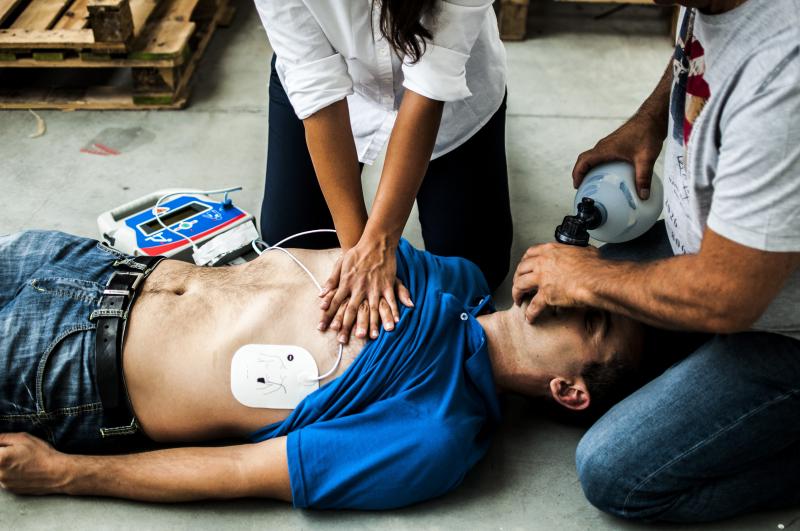
Both chest compression-only (CCO) cardiopulmonary resuscitation (CPR) and standard CPR produce comparable survival and neurological outcomes in adults with out-of-hospital cardiac arrest (OHCA), reports a study.
The authors performed a systematic search of PubMed, Scopus, Web of Science, Embase, Google Scholar, and Cochrane Library for randomized controlled trials (RCTs) and observational cohorts of adult OHCA that compared bystander CCO with standard CPR.
Eighteen studies (five RCTs and 13 observational studies), including a total of 232,655 OHCA patients (CCO: n=152,632; standard CPR: n=80,023), met the eligibility criteria.
Survival to hospital discharge (odds ratio [OR], 0.85, 95 percent confidence interval [CI], 0.61‒1.19) and favourable neurological outcomes at discharge (OR, 0.87, 95 percent CI, 0.64‒1.20) did not differ between CCO and standard CPR.
Likewise, prehospital return of spontaneous circulation (OR, 1.06, 95 percent CI, 0.89‒1.27) and survival to admission (OR, 1.12, 95 percent CI, 0.79‒1.79) were comparable between CCO and standard CPR.
In sensitivity analysis, survival was lower with standard CPR (OR, 0.87‒0.90) than CCO for 24-h mortality (OR, 0.92, 95 percent CI, 0.83‒1.01). Mortality at 1 month was similar overall (OR, 1.26, 95 percent CI, 0.98‒1.62), but it was higher after CCO in sensitivity analyses (OR, 1.32, 95 percent CI, 1.02‒1.71).
“CCO remains [an] effective, simple strategy that may enhance bystander CPR delivery,” the authors said.