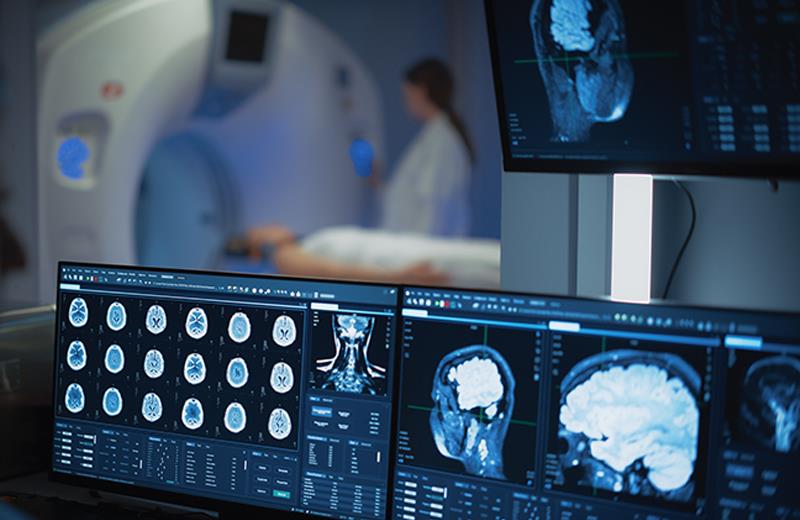
Nearly a third of glioblastoma patients treated with standard radiotherapy plus temozolomide (STUPP protocol) suffer early-onset radiation induced leukoencephalopathy (RIL), which is linked to early cognitive and functional decline, according to a study.
Furthermore, “[n]o specific clinical, genetic, or treatment-related risk factors, including losartan exposure, [have been] identified,” said lead author Dr Alexander Balcerac, Department of Neurology, Hôpital d'Instruction des Armées Percy, Service de Santé des Armées, Clamart, France.
Thirty-one patients with glioblastoma were eligible for analysis. Of these, nine (29 percent) had early-onset RIL, with high inter-rater diagnostic agreement. [EAN 2026, abstract EPO-0878]
Early-onset RIL showed no significant associations with age (p=0.067), smoking (p=0.43), hypertension (p=0.12), or PPArγ TG polymorphism (p=0.68). Furthermore, treatment with losartan appeared to have no substantial effect on early RIL prevention (p=0.72).
“While previous research suggests a role for PPARγ in radiation-induced toxicity, this study was underpowered to confirm whether losartan, as PPARγ agonist, could offer protection against early-onset RIL,” wrote Balcerac and colleagues. [Rev Neurol 2026;182:186-192]
“Longer PPArγ-agonist exposure may be needed to detect effect,” Balcerac said.
Furthermore, patients with RIL showed significantly lower Montreal Cognitive Assessment (MoCA) scores (18.0 vs 27.0; p=0.035), as well as impairments in physical (5.0 vs 9.0; p=0.023) and emotional functioning (4.5 vs 9.0; p<0.01), relative to those without RIL at 6 months.
“It is important to note that early-onset RIL is a frequent condition and that early MRI is necessary for patients who benefitted from brain radiotherapy,” Balcerac said.
ARTER trial
In this study, Balcerac and his team retrospectively analysed 75 patients enrolled in the ASTER trial, who had been treated with STUPP. They reviewed brain MRI performed prior to radiotherapy and at 6 months following treatment.
Early-onset RIL was characterized by new or progressive confluent T2/FLAIR white-matter hyperintensities with associated cortico-subcortical atrophy and no contrast enhancement, quantified using a simplified Scheltens scale.
Balcerac and colleagues used the MoCA and EORTC QLQ- C30/BN20 questionnaires to evaluate cognitive function and quality of life among participants. They also performed analyses on clinical, treatment-related, and genetic factors (ie, PPARγ).
“The lack of significant results [in this study] underscores the need for larger, prospective trials to further investigate these factors and develop targeted preventive strategies,” they said.
STUPP protocol
For patients with newly diagnosed glioblastoma, the current standard of care involves radiotherapy combined with concomitant and adjuvant temozolomide, designed as the STUPP protocol in 2005. [N Engl J Med 2005;352:987-996]
RIL is a known long-term complication of brain radiotherapy and is often associated with clinical symptoms, including subcortical frontal decline, gait apraxia, and urinary incontinence. These symptoms usually appear years after glioblastoma treatment in long survivors. [Rev Neurol 2026;182:186-192]
“Since RIL is irreversible and can result in severe disability, preventing its onset is crucial. Moreover, identifying patients at higher risk may lead to potential adjustments to treatment regimen or closer monitoring,” wrote Balcerac and colleagues.