According to the data released by the Ministry of Health (MOH) on 21 February 2026, a total of 3,161
tuberculosis (TB) cases has been reported nationwide this year. Almost 600 new cases were reported in epidemiological week 6. [
https://tinyurl.com/bdd89vje]
MOH noted that the increase is linked to ongoing community transmission and urged the public to remain vigilant, particularly during frequent social gatherings and in enclosed environments.
Tuberculosis remains a long-standing public health challenge in Malaysia. According to the World Health Organization (WHO), Southeast Asia continues to carry one of the highest global TB burdens. Early detection and completion of treatment remain the key strategies in controlling the disease.
Tuberculosis: Slow progression and often overlooked
TB is caused by
Mycobacterium tuberculosis and spreads mainly through the air. When infected individuals cough or speak, bacteria can remain suspended in the air for several hours, particularly in enclosed, poorly ventilated spaces.
Common symptoms include:
• Cough lasting more than 2–3 weeks
• Low-grade fever in the afternoon
• Night sweats
• Unexplained weight loss
• Persistent fatigue
Many people mistake these symptoms for a common cold or “body heat” and self-medicate with cough syrup, which may delay proper diagnosis.
Prolonged cough a red flag
Pharmacist Lim En Ni stated that although public awareness of respiratory symptoms has increased, many still underestimate the seriousness of prolonged coughing. She explained: “If a cough lasts more than 2 to 3 weeks, even without high fever, individuals should undergo a chest X-ray or sputum test.”
“Cough medication only relieves symptoms but does not treat TB. The earlier it is detected, the higher the treatment success rate and the lower the risk of infecting family members,” she added.
Lim highlighted that high-risk groups include:
• Individuals with diabetes
• Smokers
• Those who are sleep-deprived or under chronic stress
• Elderly individuals or those with weakened immunity
TB is treatable, but treatment must be completed
MOH emphasised that TB is curable. However, standard treatment requires at least 6 months of consistent treatment with antibiotics. Stopping treatment prematurely may result in drug-resistant TB, increasing both treatment complexity and public health risks. Lim further advised: “Even during festive seasons or travel, patients must never interrupt their medication. Missing doses increases the risk of drug resistance.”
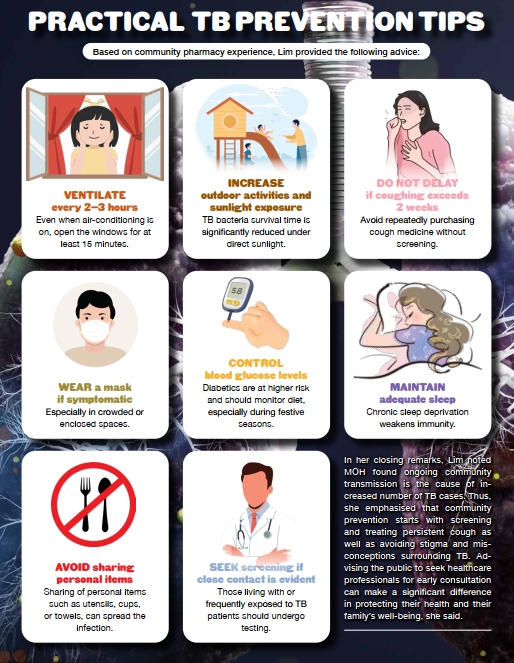 Practical TB prevention strategies from a pharmacist’s perspective
Note: There have been no updates on TB cases since 21 February 2026.