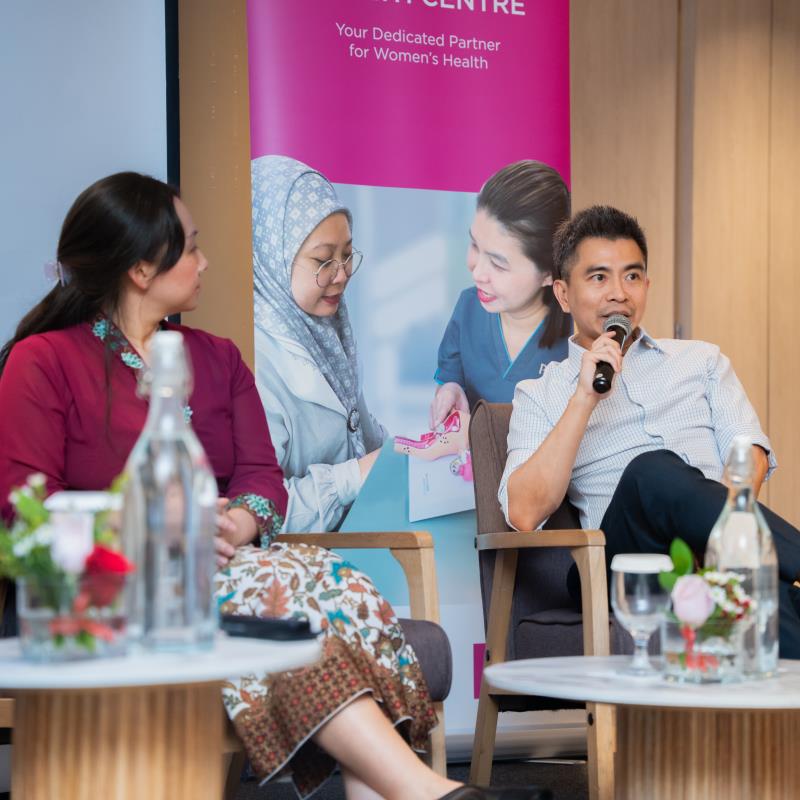
Endometriosis remains an unspoken issue in women’s health, often taking years before a diagnosis is made. At a recent panel discussion organised by Hospital Picaso, clinicians highlighted how delays in diagnosis and fragmented care continue to shape poor outcomes while advocating for a shift towards coordinated, multidisciplinary management. The panel consisted of Dr Tan Ee Ping and Dr Sharifah Halimah Jaafar, both consultant gynaecologists; Dr Debbie Teh, a consultant obstetrician and gynaecologist; and Dr Michael Lim, a consultant gynaecologist and gynae-oncologist.
Delayed diagnosis continues to amplify disease burden
Endometriosis is frequently diagnosed late, with women waiting 5 to 10 years before receiving a confirmatory diagnosis. During this time, symptoms such as severe menstrual pain, fatigue, and pelvic discomfort are often normalised or dismissed.
Tan noted that two key factors drive this delay:
1. Normalisation of dysmenorrhoea both by patients and healthcare providers
2. Historical reliance on laparoscopy as the diagnostic gold standard
Many early-stage cases are not visible on routine imaging, making it difficult to confirm the diagnosis without surgery, said Tan. Recent advances in imaging, however, are beginning to change this landscape, allowing earlier detection without the need for invasive procedures.
The consequences of delayed diagnosis are serious. Data from a UK national study show that 50 percent of women with endometriosis undergo at least three surgeries in their lifetime, with the interval to repeat surgery averaging less than 2 years. Endometriosis is rarely diagnosed early. Most patients present at advanced stages, when surgery becomes unavoidable.
Yet, early diagnosis allows for timely initiation of medical therapy, potentially preventing progression to severe disease and reducing the need for surgical intervention.
Approach treatment with a structured, stepwise approach
Management of endometriosis is not limited to surgery. In fact, surgery is usually an indicator of late-stage disease. The panel outlined a three-tiered treatment strategy:
- Medical therapy
- Non-invasive ablation techniques
- Surgery, when indicated
Surgical intervention is typically reserved for failure of medical therapy, in those with infertility issues and if there is suspicion of malignancy. Lifestyle modification also plays a supportive role across all stages of treatment.
Fertility impact extends beyond structural damage
Endometriosis affects fertility through multiple mechanisms. Teh explained that structural changes such as ovarian cysts, tubal damage, and adenomyosis can impair reproductive function. However, fertility may also be affected in early-stage disease.
Endometriosis is a chronic inflammatory condition, added Sharifah. Even mild disease can create a hostile pelvic environment that disrupts fertilisation and implantation. Estimates suggest that 25 to 50 percent of women experience infertility due to endometriosis, highlighting the importance of early and proactive management. [Obstet Gynecol Clin North Am 2012;39(4):535-549]
The first surgery should be the last surgery
A recurring theme throughout the discussion was the importance of getting surgery right the first time. Key principles of surgery include complete excision of disease, a multidisciplinary surgical involvement, and pre-operative mapping and planning.
A multidisciplinary team approach is important as endometriosis frequently involves multiple organs, including the bowel, bladder, and ureter. As such, surgery often requires collaboration between gynaecologists, colorectal surgeons, and urologists.
Incomplete surgery leads to recurrence and repeat operations said Teh. Therefore, the goal is to clear all disease in one setting while preserving function.
Recurrence is driven by disease biology and even after successful surgery, it can be a challenge to prevent. Sharifah highlighted that recurrence is not solely due to residual disease, but also to new lesion formation driven by retrograde menstruation and immune dysfunction.
This underpins the role of long-term hormonal therapy in preventing disease recurrence. Patients often ask why they need medication after surgery. Here, clinicians must explain to them that it is not just about treating what is left behind but preventing new disease lesions from forming.
Endometriosis can also turn cancerous
Lim also noted a low malignancy risk associated with endometriosis. The condition carries a 0.5 to 1 percent risk of malignant transformation, most commonly ovarian cancer. Here, he emphasised the importance of risk stratification using tools such as Risk of Malignancy Index (RMI) and Risk of Ovarian Malignancy Algorithm (ROMA); imaging modalities such as computed tomography (CT) and magnetic resonance imaging (MRI); and clinical judgement in decision-making.
Once again, in suspicious cases, a multidisciplinary team discussion is essential, particularly when balancing oncological safety with fertility preservation, he noted.
A need for a Centre of Excellence
The panel strongly advocated for the development of dedicated endometriosis centres. At Hospital Picaso, over 500 endometriosis cases have been managed, with approximately 30 percent requiring multidisciplinary surgery. Unfortunately, many patients had undergone multiple prior operations before referral.
Endometriosis is increasingly recognised as a multi-organ disease, requiring coordinated care across specialties. A Centre of Excellence model will enable earlier diagnosis, low recurrence rates, and reduced risk of complication. Pre-operative imaging, multidisciplinary planning, and one-stage surgery are central to this approach. Everyone in the multidisciplinary team from radiologists to surgeons needs to speak the same language.
Sharifah closed with one case that stood out among her patients. She described a young woman whose symptoms were so severe that it left her functional for only half of each month. She was basically incapacitated for the remaining half of the month. She had gone to numerous doctors and was inadequately treated up till then. After undergoing comprehensive multidisciplinary surgery and long-term management, she was able to regain independence and eventually start her own business. Such outcomes highlight what effective treatment can achieve.