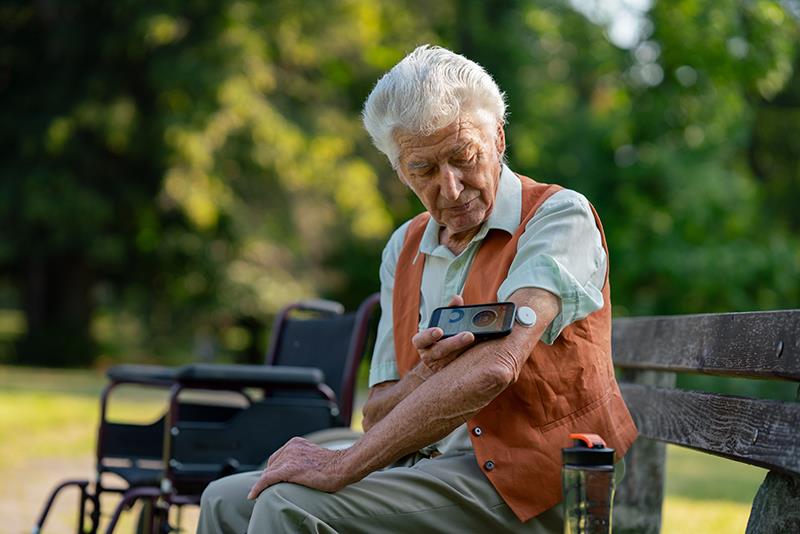
In adult patients with type 2 diabetes (T2D) receiving basal insulin alongside other glucose-lowering medications, real-time continuous glucose monitoring (CGM) demonstrates superiority over self-monitoring of blood glucose (SMBG) in terms of optimizing glycaemic control, according to the FreeDM2 study.
“The use of real-time CGM resulted in improved HbA1c concentrations in participants with type 2 diabetes treated with basal insulin and SGLT2 inhibitors or GLP-1 or dual GIP/GLP-1 receptor agonists, without increasing hypoglycaemia or other serious adverse events,” reported first study author Dr Emma Wilmot from the University of Nottingham in Nottingham, England, and colleagues.
Over 16 weeks, mean HbA1c concentration decreased from 8.8 percent at baseline to 8 percent in the CGM group vs from 8.8 percent to 8.7 percent in the SMBG group (adjusted difference, −0.6 percentage points, 95 percent confidence interval [CI], −0.8 to −0.3; p<0.0001). [Lancet Diabetes Endocrinol 2026;14:463-474]
At week 32, mean HbA1c concentration further dropped to 7.8 percent in the CGM group vs 8.3 percent in the SMBG group (adjusted difference, −0.5 percentage points, 95 percent CI, −0.7 to −0.2; p<0.0001).
In terms of safety, serious adverse events (AEs) occurred in 7 percent of participants in the CGM group and 8 percent in the SMBG group. One participant in the CGM group died due to ischaemic heart disease, and one participant in the SMBG group experienced two episodes of severe hypoglycaemia.
“FreeDM2 enrolled a population commonly encountered in routine clinical practice, in which glycaemic targets are not achieved despite contemporary therapy, highlighting the challenges of managing T2D as the condition progresses over time,” Wilmot and colleagues noted. [Diabetes Technol Ther 2026;28:14S-18S]
The findings, they said, highlight “the role of CGM in supporting improved glycaemic control through enhanced self-management and more informed pharmacological optimization.”
FReeDM2 study
A total of 303 adults (mean age 60.7 years, 33 percent female, mean T2D duration 16.7 years) with baseline HbA1c of 7.5 percent to 11 percent despite receiving basal insulin and SGLT2 inhibitors or GLP-1 receptor agonists or dual GIP/GLP-1 receptor agonists participated in the study.
The participants were randomly assigned to use a CGM device (n=198) or to continue with SMBG (n=105) across two phases: during self-directed basal insulin titration (weeks 1–16) and during clinician-supported intervention wherein additional therapies could be initiated in line with national guidance (weeks 17–32).
Results for other outcomes showed that participants using real-time CGM also recorded higher time in the target glucose range (3.9–10 mmol/L) and had lower mean glucose concentrations throughout compared with those in the SMBG group.
At week 16, more participants the CGM group than in the SMBG group achieved HbA1c targets of ≤7 percent (15 percent vs 2 percent; odds ratio [OR], 9.11; p=0.0045), ≤7.5 percent (34 percent vs 17 percent; OR, 2.69; p=0.0045), and ≤8 percent (59 percent vs 35 percent; OR, 3.44; p<0.0001). These between-group differences were less pronounced by week 32, although the proportion of participants who achieved these targets remained higher in the CGM group, according to Wilmot and colleagues.
Accelerometer data also indicated a significant increase in overall daily activity in the CGM group vs the SMBG group at week 16, with more time spent in light-intensity physical activity (adjusted mean difference, 12.1 min per day).
“Furthermore, CGM users reported improved participant-reported outcomes, including satisfaction with glucose monitoring and confidence in management of hypoglycaemia. Accordingly, use of glucose sensors was high, with a median sensor usage of 97.6 percent in the first phase of the study and 98.2 percent in the second phase of the study,” the authors said.
Overall, the FreeDM2 study “provides rationale for updating treatment guidelines to support wider use of the technology,” they added.
More advanced therapies needed
In an accompanying editorial, Dr Charlotte Boughton from the University of Cambridge, Cambridge, UK, emphasized that despite the glycaemic improvements achieved with CGM use, the participants did not meet the recommended glycaemic targets. [Lancet Diabetes Endocrinol 2026;14:439-441]
“Despite widespread uptake of highly effective glucose lowering medications, basal insulin, and CGM combined with healthcare professional optimization, average HbA1c at the end of the trial was 7.8 percent, and the mean proportion of time with glucose in the target range (3.9–10 mmol/L) was 60 percent,” Boughton noted. “These figures fall short of the recommended glycaemic targets and highlight an unmet need for more advanced therapies, such as automated insulin delivery, in this population.”