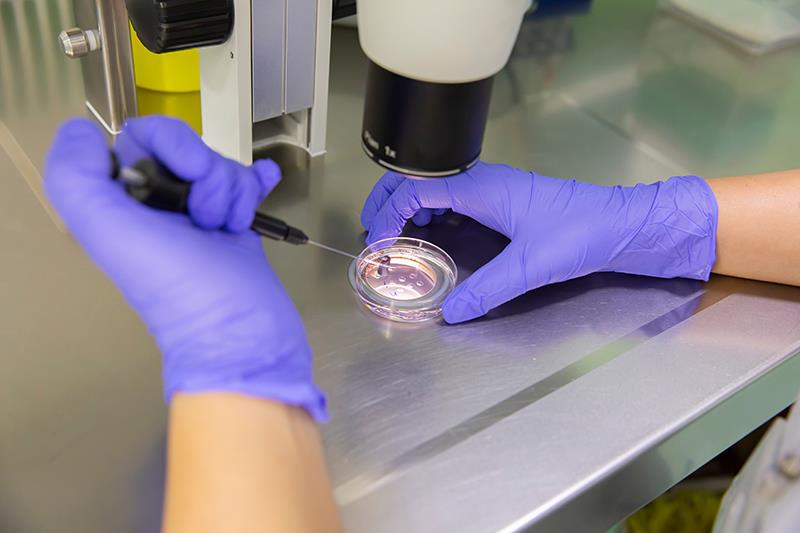
Modern in vitro fertilization (IVF) treatment now has better success rates than historical approaches and even reduces chances of twin and triplet pregnancies, according to a study presented at ESHRE 2026.
The cumulative live birth rate (CLBR) with modern IVF stands at 68.2 percent over three cycles, with 95.3 percent single embryo transfer and 2.9 percent multiple births. [ESHRE 2026, abstract L26/O-329]
“The biggest shift has been that blastocyst culture has moved from being an exception to becoming the default,” lead author Dr Dean Morbeck, Monash University, Obstetrics and Gynecology, Melbourne, Australia, said in a press statement. [www.focusonreproduction.eu/press-releases/modern-ivf-achieves-higher-success-rates-with-single-embryo-transfer-major-study-finds/]
“That change drove improvements across IVF laboratories, including reduced oxygen conditions, purpose-built incubators and minimized disruption to embryos during culture,” he added.
A total of 18,396 women (mean age 36.2 years) initiating first IVF cycle between January 2012-December 2021 across seven Australian fertility clinics with follow-up through December 2023 were included in this multicycle cohort study. One in four participants (25 percent) underwent preimplantation genetic testing for aneuploidy in one or more cycle.
In intention-to-treat analysis, the overall CLBR over three cycles was 58.7 percent, while that in optimal per-protocol analysis was 68.2 percent. Single embryo transfer was used in nearly all (95.3 percent) embryo transfers, yielding a multiple birth rate of 2.9 percent.
The optimal CLBRs over three cycles by age group were 84.5 percent for <35 years, 74.4 percent for 35‒37 years, 57.7 percent for 38‒40 years, and 30.1 percent for 41‒42 years.
IVF formulation
In 2016, both single-step culture medium and time-lapse culture were introduced to support embryo development from fertilization through the blastocyst stage.
A subanalysis comparing the years 2012-2015 with 2017-2021 revealed increases (p<0.001) in usable blastocyst rate (48.3 percent vs 57.6 percent), optimal CLBR (67.1 percent vs 69.8 percent), and single embryo transfer rate (92.8 percent vs 97.3 percent). Decreases in multiple birth rate (3.2 percent vs 2.7 percent; p=0.033) was also observed.
“Blastocyst culture also became much more effective with vitrification, which dramatically improved embryo survival after freezing and warming, making frozen embryo transfer outcomes comparable to fresh transfers,” Morbeck said.
“Together, these advances enabled approaches such as freeze-all treatment, where embryos are transferred one at a time later, rather than during the initial stimulation cycle,” he added.
Singe embryo
These findings also argue with the assumption that transferring multiple embryos is necessary to increase the success rate of IVF treatment.
“For many years, transferring two embryos increased the chance of pregnancy from any one transfer, but often came with twin pregnancy rates approaching 30 percent. What our data show is that this trade-off has largely disappeared,” Morbeck said.
“Across more than 18,000 women, we achieved strong cumulative live birth rates while using single embryo transfer in 95 percent of cases and maintaining a twin birth rate under 3 percent. A concerted effort to reduce twin pregnancies has not cost patients their chance of taking home a baby – it has coincided with that chance increasing,” he added.
This study identified women who underwent first egg retrieval using autologous oocytes. Those with donor oocytes, frozen oocytes, preimplantation genetic testing for monogenic disorders or structural re-arrangement, and gestational carriers were excluded. Intention-to-treat and Kaplan-Meier analyses were performed to analyse CLBR per women over three initiated cycles.